The water was as still as a millpond …
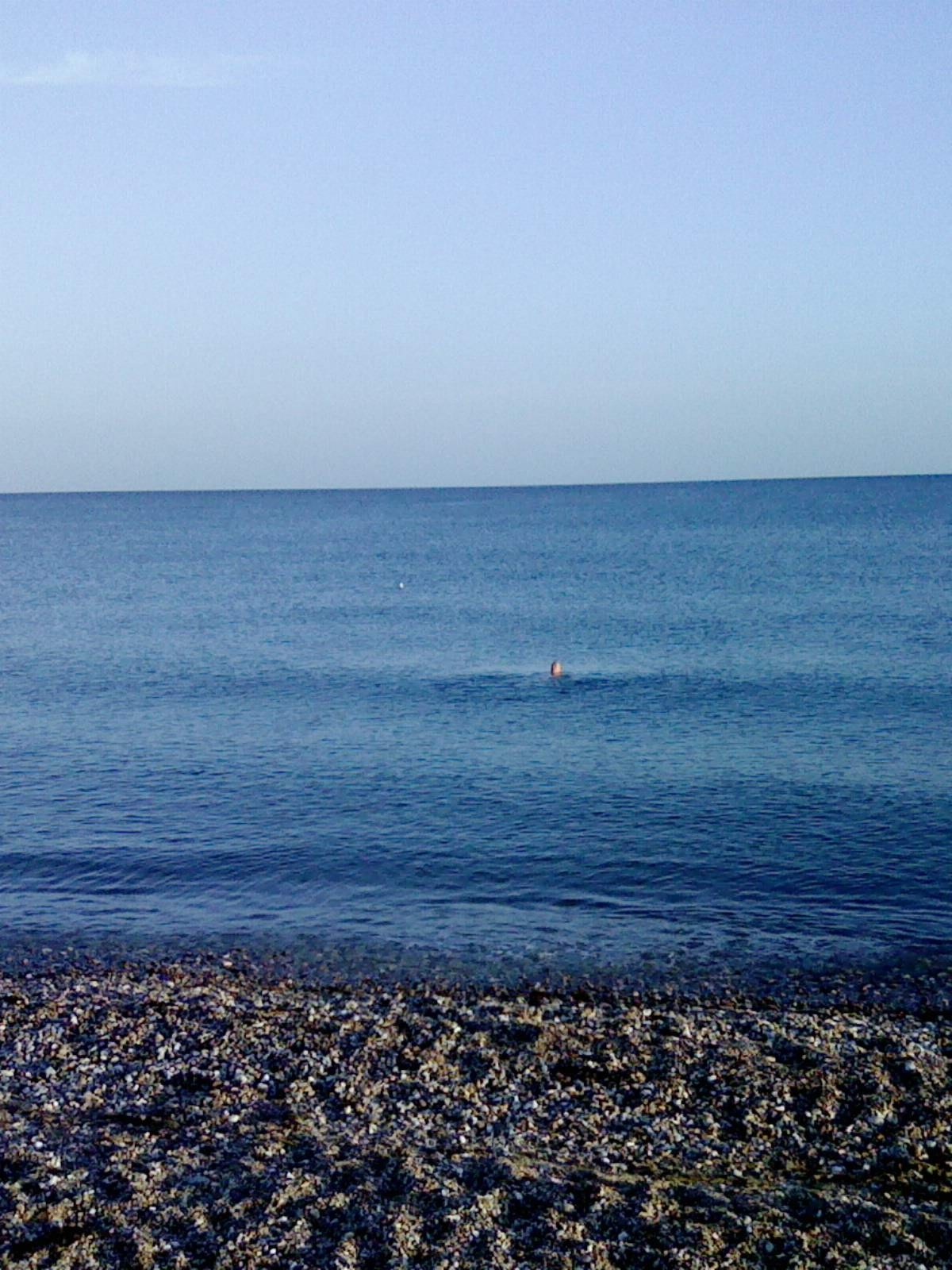
Bliss …

Speedos rule …

All flesh is as grass
The water was as still as a millpond …
Bliss …
Speedos rule …

numberswiki.com
/>
I have finally hit on a truly easy, foolproof way of making consistently good sourdough loaves. The sourdough world is full of time consuming labours of love, the results of which I’m sure can be delicious; but they all struck me as so complicated, so dependant on the right room temperatures, precisely measured ingredients, correct to the gram, repeated kneading and proving, not to mention the additional palaver during cooking, involving water and steam, I felt exhausted before starting. My results were usually poor to middling.
This process involves no measuring, no kneading and minimal hand contact. The preparation takes a maximum of ten minutes, divided into two separate sessions. The waiting time before baking is a lot longer, but involves no additional effort.
Firstly, a ‘mother’ is required. This is the sourdough starter. Once you have it, it’s yours forever. There’s no quick or easy way around this, unless you can cadge some from a friend, or a baker, or even buy it. It’s simple to make, but takes a week or so. In a nutshell, mix some flour (preferably rye or wholemeal) and a mug or two of water into a pancake texture and leave in a bowl exposed to the air for a few days. When it starts bubbling, throw half away and replace with more flour and water. Repeat this until the mixture (a pint or so) gives off a nice, but definitely sour aroma and is bubbling somewhat. That is your mother! (If, at any stage, the mother separates into solid and liquid, whisk gently until it becomes one again.)
p
Note:
For these loaves I use short baguette trays (available as doubles or triples) with perforations. The holes seem to help ensure a consistent, less dense result, and the trays need neither oiling nor cleaning. If another sort of mould is used, I can’t vouch for the result.
The two step process:
Step one:
Take some of the mother (a couple of tablespoons, say) and place it in a second bowl. Add some water and some flour, and whisk into a pancake texture. Cover this bowl with a plate and put to one side. This is your ‘new’ mother.
Add flour (white and/or wholewheat) and any seeds (pumpkin, linseed, etc) into the first bowl, along with the leftover mother, bearing in mind the capacity of your baking trays. If you want (I don’t bother) you can add salt. Add water as needed (this can be any temperature, although warm seems to add springiness to the dough). Stir this and then ‘knead’ it with a strong wooden spoon until it is a fairly solid cake making texture. This is the critical part of the process. Too little water can result in too dry a loaf and small air bubbles. Too much water can mean a sticky loaf. The ideal is a dough that can be formed into a malleable lump that neither sticks to the bowl nor resists the pressure of the spoon.
Cover this bowl with a plate and leave for at least twelve hours – ideally overnight. Room temperature seems to be irrelevant.
Step two:
Put some flour on a flat dish (such as a Pyrex lid). With the wooden spoon, scoop out as much of the dough, which should have doubled in size (if it hasn’t, there’s something adrift with your mother) as will be required for the tray size you’re using, drop it onto the floured dish, scrape of any bits sticking to the wooden spoon with a knife, and prepare to use your hands.
As deftly as you can, without disturbing its shape too much, roll the lump of dough over in the flour until its surface is well covered, and then place it in or on the baking receptacle. In the case of baguette trays, the piece of dough should be elongated to fit. It is of no importance to make a ‘correct’ shape, so long as it fits, roughly. Repeat, as necessary.
Bake immediately. Everyone’s oven is different. I have an electric, fan assisted model that gives the best result at 160 degrees Celsius for 45 minutes. If this doesn’t work with you, experiment with other temperatures and timings.
Take the bread from the oven, knock the loaves out of their trays, and marvel at the result.
I woke up around midnight, cold, even though I was perspiring freely. Every joint in my body ached. My head throbbed. I was nauseous, my abdomen was cramping, I felt like vomiting and my bowels trembled alarmingly. I thought back to what I had eaten the previous day.
Bread, cheese, ham, oranges – nothing remotely suspicious … unless, that was, I considered the source of that bread, a wholesome ‘integral’ loaf sold in the local market by travellers who didn’t appear to wash.
I staggered down the stairs to the bathroom and had a violently explosive crap. Whatever Sir Thomas got right in the invention of the water closet, he failed to allow for these sorts of event.
We set off in search of these fabled pools knowing no more than that they were on the outskirts of Granada. When we got to Santa Fe, we started asking passers by for directions to the ‘agua caliente’. Somewhere in the ‘campo’, we were told. After an hour or so of driving up and down the same old roads, I suddenly caught sight of a sign marked ‘banos’. I swerved off the road, and pulled up alongside a Rasta haired girl with an enormous earring who was lugging a backpack. It turned out she was heading for the same place as us, so we offered her a lift. She was strangely silent as to the exact direction we should take when we came to the first fork in the road; she didn’t seem to understand our broken Spanish. We took a guess and turned right down a dirt track. Everything was indescribably muddy, as it had been raining for two days non-stop. We pulled up at a barricaded house, and while Michelle got out to ask for directions, I swivelled around to inquire whether the girl spoke English. No, she didn’t. French, perhaps? Indeed, she did. In fact, it turned out she was French. She told us some garbled story about living in Barcelona, coming down to Granada with friends, who had since legged it to Morocco, and having driven to the ‘banos’ at night – hence, her uncertainty about the route.
Today, I cycled into Chichester to buy one of these at PC World:
“At some future day it will be proved – I cannot say when and where – that the human soul is, while in earth life, already in an uninterrupted communion with those living in another world; that the human soul can act on these beings, and receive in return impressions of them without being conscious of it in the ordinary personality.”
A lot of people in the Alexander world emphasise the need to understand the complexities of our physiology, and act on that understanding, if we are to have any hope of improving our use. That is, by knowing more about the way we should ideally function, we can somehow make it happen..
Given the obvious difficulty any dissension (of which there is plenty) in what constitutes ‘ideal functioning’ would cause in each of us individually trying to bring it about, it has always seemed to me there might be an
Two things I’ve read recently about the Technique have struck me. The first was the report by the British Medical Journal that:
“Six lessons followed by exercise were about 70% as effective as 24 lessons.”
The other was the claim by Alexander Teacher, Jeff Hall, that:
“We are selling benefits that exist so far up Maslow’s hierarchy of needs that there is a very limited number of people who will ever be attracted to it.”
In my view, the chief benefits of the Technique can be summed up as: